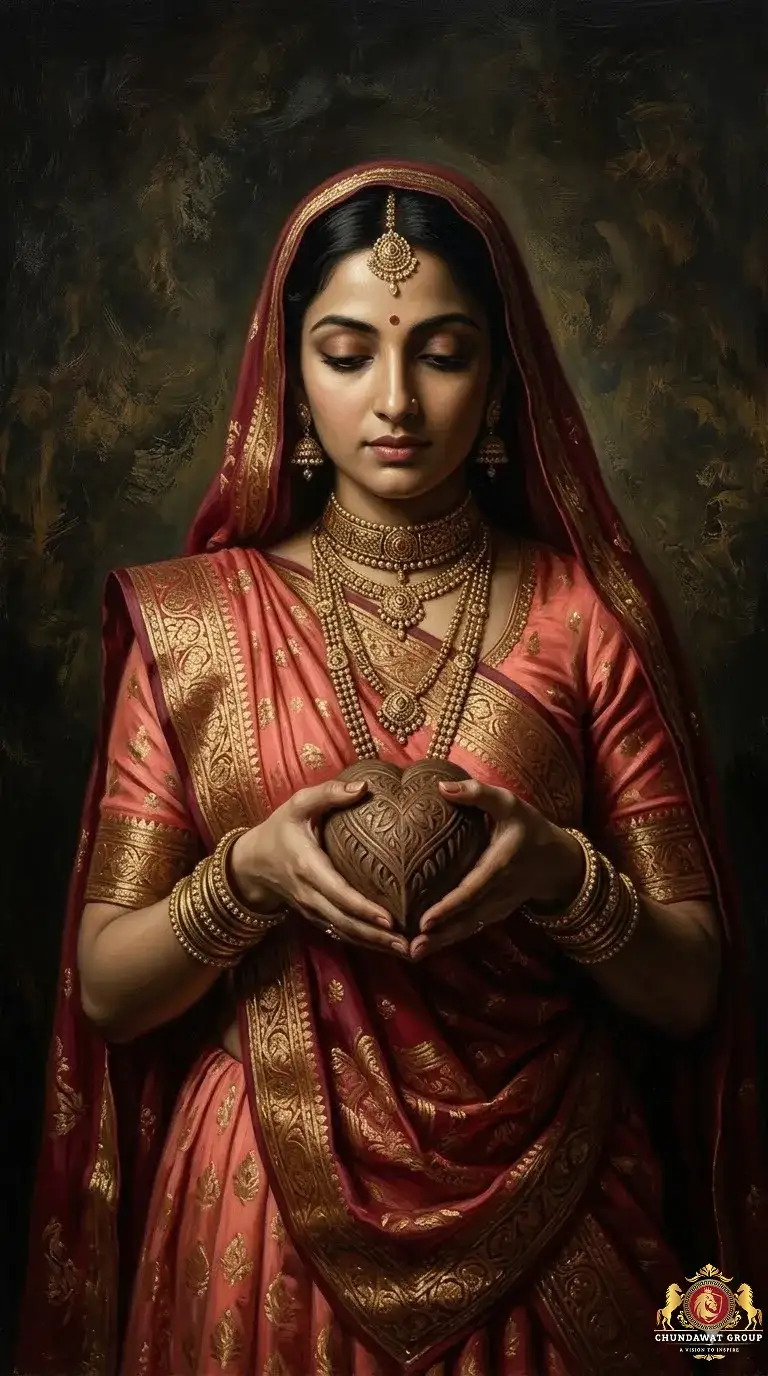
Who Was Rani Karnavati of Mewar?
Rani Karnavati of Mewar was the wife of Maharana Sangram Singh I (Maharana Sanga) and the mother of Maharana Udai Singh II. She served as regent of Mewar during a period of political instability and is best remembered for her association with the Siege of Chittorgarh in 1535, when Sultan Bahadur Shah of Gujarat attacked the fortress.
Her story connects some of the most important figures and events in Mewar history: Maharana Sanga, the 1535 siege, the tradition of jauhar, the founding of Udaipur, and the lineage of Maharana Pratap.
Family and Lineage
Rani Karnavati married Maharana Sanga, one of the most powerful rulers of Mewar during the early 16th century. Her family became part of the Sisodia royal lineage that played a central role in the history of Rajasthan.
Her husband expanded Mewar's influence and became a major power in Rajput politics before his conflict with Babur culminated in the Battle of Khanwa in 1527. Sanga was defeated and died the following year in 1528, creating a difficult succession situation for Mewar.
Life With Maharana Sanga
Maharana Sanga was one of the most formidable Rajput rulers of his era. He fought numerous battles, expanded Mewar's territory, and built the Sisodia kingdom into a major power. After the defeat at Khanwa, Sanga's health deteriorated and he died in 1528.
Karnavati's time as the wife of Maharana Sanga would have been marked by both the grandeur of Mewar's golden period and the growing threat posed by the Mughal Empire under Babur. Her political awareness during this period was probably shaped by the court culture, military campaigns and alliances of Sanga's reign.
Rani Karnavati as Regent
After Maharana Sanga's death in 1528, Mewar entered a period of political instability. His successors faced internal conflicts as well as threats from powerful neighbouring states. Ratan Singh II succeeded Sanga but died in 1531, followed by Vikramaditya Singh, who was still young and faced opposition from powerful nobles.
Karnavati became an important political figure during this period. As regent, she had to protect the interests of her sons and maintain the position of the Sisodia dynasty while Mewar faced external threats. The internal politics of Mewar during this period were complicated—powerful nobles had significant influence over governance, and the young Maharana was not in a strong position.
Bahadur Shah of Gujarat and Mewar
Sultan Bahadur Shah of Gujarat was one of the most powerful rulers in western India during the 1530s. He expanded the Gujarat Sultanate aggressively and came into conflict with Mewar over territory, influence and political dominance.
Bahadur Shah's campaigns posed a serious threat to Mewar because Gujarat possessed substantial military resources, including gunpowder weapons and siege equipment that were becoming increasingly important in Indian warfare.
The growing power of Gujarat and its proximity to Mewar made a military confrontation increasingly likely during the early 1530s.
The Siege of Chittorgarh (1535)
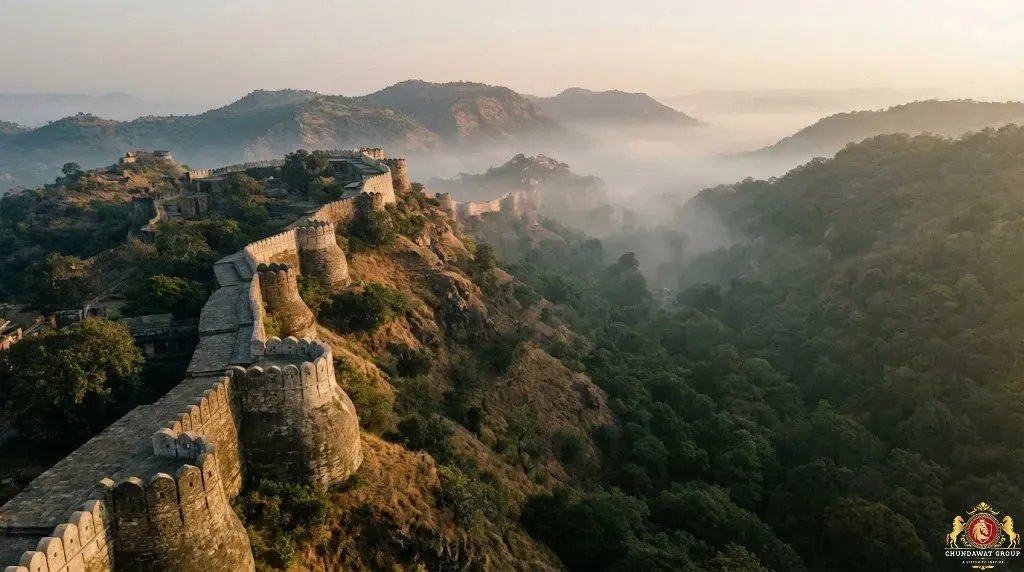
The most important event associated with Rani Karnavati is the Siege of Chittorgarh in 1535. Sultan Bahadur Shah of Gujarat launched a major campaign against Mewar and besieged Chittorgarh.
The fortress was one of the strongest strategic positions in Rajasthan, but the increasing use of gunpowder artillery and siege weapons gave attacking armies new methods for breaking fortified positions. Bahadur Shah's forces eventually succeeded in overcoming the resistance.
The fall of Chittorgarh was followed by the traditional account of a major jauhar inside the fort.
Jauhar at Chittorgarh
Rani Karnavati is traditionally associated with the jauhar at Chittorgarh in 1535. Jauhar was a practice in Rajput history in which women self-immolated rather than face capture or dishonour during the fall of a fort.
Chittorgarh is traditionally associated with three major jauhar episodes: by Alauddin Khalji in 1303, by Bahadur Shah in 1535, and by Akbar in 1567–1568. The 1535 episode is most closely associated with Rani Karnavati.
The Rakhi Story: Karnavati and Humayun
Rani Karnavati is also associated with the famous story of sending a rakhi (a thread or symbol of sibling bond) to the Mughal emperor Humayun, seeking his military assistance against Bahadur Shah.
However, this episode is historically disputed. Contemporary sources do not firmly establish the rakhi story in the form in which it is popularly told today. Some historians argue that the rakhi tradition in its popular form may have been embellished or added to the narrative in later centuries.
Humayun did eventually move against Bahadur Shah, but Chittorgarh had already fallen by the time the situation developed. The political relationship between Mewar and the Mughal Empire during this period was complex and cannot be reduced to a single symbolic gesture.
After the Fall of Chittorgarh
The fall of Chittorgarh in 1535 was a devastating event for Mewar, but the Sisodia dynasty survived. The political instability continued, and the young princes were moved to safety.
Panna Dhai, a nursemaid, is traditionally credited with saving the life of Udai Singh II during the dangerous period following the siege. The survival of Udai Singh II was crucial for the future of the Sisodia dynasty.
Udai Singh II and the Founding of Udaipur
Rani Karnavati's greatest contribution to Mewar's history may be her role as the mother of Udai Singh II. Udai Singh eventually became Maharana and founded the city of Udaipur in 1559, establishing it as the new capital of Mewar after the fall of Chittorgarh.
Udaipur became the centre of Mewar administration, culture and architecture for the centuries that followed. The lake city's palaces, temples and cultural institutions owe their existence to the political decisions and survival of the Sisodia lineage—a lineage that passed through Rani Karnavati.
Connection to Maharana Pratap
Through her son Udai Singh II, Rani Karnavati became the grandmother of Maharana Pratap—one of the most celebrated rulers in Indian history. The lineage she protected—Maharana Sanga → Rani Karnavati → Udai Singh II → Maharana Pratap—represents one of the most important family lines in Mewar history.
This dynastic connection gives Rani Karnavati a significance that extends far beyond the 1535 siege. Without the survival of her sons, the Sisodia dynasty might not have continued, and Maharana Pratap might never have been born.
Did Rani Karnavati Found Udaipur?
No. Rani Karnavati did not found Udaipur. That was her son Udai Singh II, who established Udaipur as the new capital of Mewar in 1559—more than two decades after the 1535 siege and Karnavati's death.
However, Karnavati's role in ensuring the survival of the Sisodia dynasty was a prerequisite for the founding of Udaipur. Without her sons surviving, the political trajectory that led to Udaipur's founding might have been very different.
Historical Legacy
Rani Karnavati's legacy extends across several dimensions. As regent of Mewar, she played an important political role during the minority and troubled reign of her sons. Her name became permanently connected with the siege and fall of Chittorgarh under Bahadur Shah, and traditional Mewar histories associate her with the jauhar that preceded the fall.
Most importantly, her son Udai Singh II continued the Sisodia dynasty, founded Udaipur, and became the father of Maharana Pratap—making Karnavati the grandmother of one of the most celebrated rulers in Mewar history.
Her importance is not limited to the story of jauhar. She was also a royal mother and regent who navigated a difficult political environment while the Sisodia kingdom faced serious internal and external challenges.
Battles & Conquests
Siege of Chittorgarh
1535Sultan Bahadur Shah of Gujarat launched a major campaign against Mewar and besieged Chittorgarh. The fortress was one of the strongest strategic positions in Rajasthan, but the increasing use of gunpowder artillery gave the attacking army new methods for breaking fortified positions. Karnavati organized the defense as regent. The fall of Chittorgarh was followed by the traditional account of a major jauhar inside the fort, with which Rani Karnavati is closely associated.
📜 Did You Know?
Rani Karnavati was the grandmother of Maharana Pratap through her son Udai Singh II.
The story of Karnavati sending a rakhi to Humayun is popular but historically disputed—contemporary evidence does not firmly establish the episode in the form popularly told today.
Chittorgarh is traditionally associated with three major jauhar episodes: by Alauddin Khalji in 1303, by Bahadur Shah in 1535, and by Akbar in 1567–1568. The 1535 episode is most closely associated with Rani Karnavati.
She did not found Udaipur—that was her son Udai Singh II in 1559, more than two decades after her death.
Her son Udai Singh II later established Udaipur as the new capital of Mewar after the fall of Chittorgarh.
The political situation during her regency was complicated by internal disputes among the Mewar nobility, the succession of young rulers, the growing power of Gujarat, and the changing political balance after Babur's establishment of Mughal power.
Frequently Asked Questions
Who was Rani Karnavati of Mewar?
+
Rani Karnavati was the wife of Maharana Sanga and served as regent of Mewar during a period of political instability in the early 16th century. She is best known for her association with the 1535 Siege of Chittorgarh.
Was Rani Karnavati the mother of Maharana Pratap?
+
No. She was the grandmother of Maharana Pratap. Her son Udai Singh II was Maharana Pratap's father.
Did Rani Karnavati send a rakhi to Humayun?
+
This is a popular story but historically disputed. Contemporary sources do not firmly establish the rakhi episode in the form in which it is popularly told today.
What happened during the 1535 Siege of Chittorgarh?
+
Sultan Bahadur Shah of Gujarat besieged and captured Chittorgarh. The fall of the fort was followed by the traditional account of a major jauhar inside the fortress, with which Rani Karnavati is closely associated.
How many times did jauhar happen at Chittorgarh?
+
Chittorgarh is traditionally associated with three major jauhar episodes: in 1303 (Alauddin Khalji), 1535 (Bahadur Shah), and 1567–1568 (Akbar). The 1535 episode is most closely associated with Rani Karnavati.
Did Rani Karnavati found Udaipur?
+
No. Udaipur was founded by her son Udai Singh II in 1559, more than two decades after her death.
Who saved Udai Singh II after the fall of Chittorgarh?
+
Panna Dhai, a nursemaid, is traditionally credited with saving Udai Singh II's life during the dangerous period following the 1535 siege.
Why is Rani Karnavati important in Mewar history?
+
She is important as the wife of Maharana Sanga, as regent of Mewar during a crisis, and most significantly as the mother of Udai Singh II and grandmother of Maharana Pratap. Her role in ensuring the survival of the Sisodia dynasty shaped the course of Mewar's history.
When did Rani Karnavati die?
+
She is traditionally associated with the jauhar at Chittorgarh in 1535, which is the year generally given for her death.
Who were Rani Karnavati's children?
+
Her known children include Vikramaditya Singh and Udai Singh II. Udai Singh II would go on to found Udaipur and father Maharana Pratap.