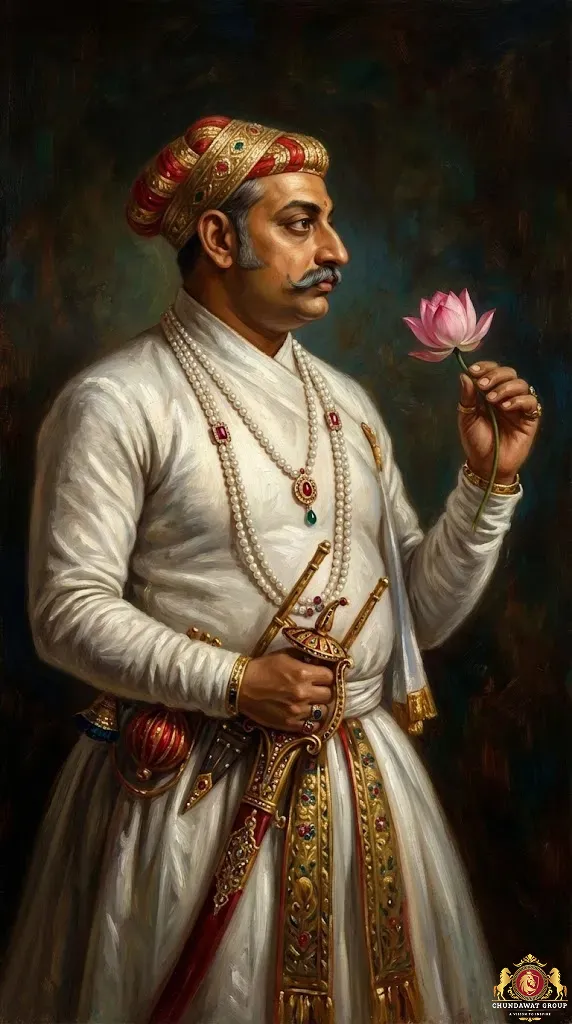
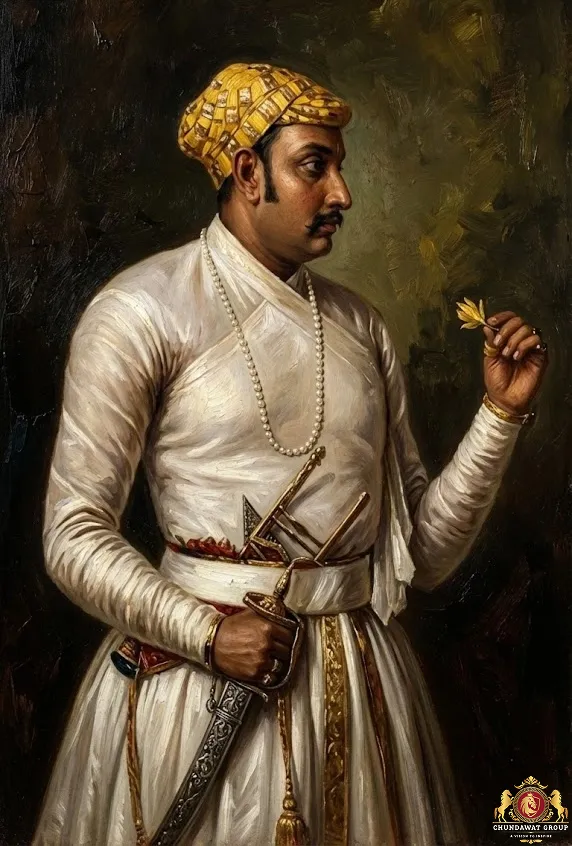
Who Was Maharana Amar Singh I?
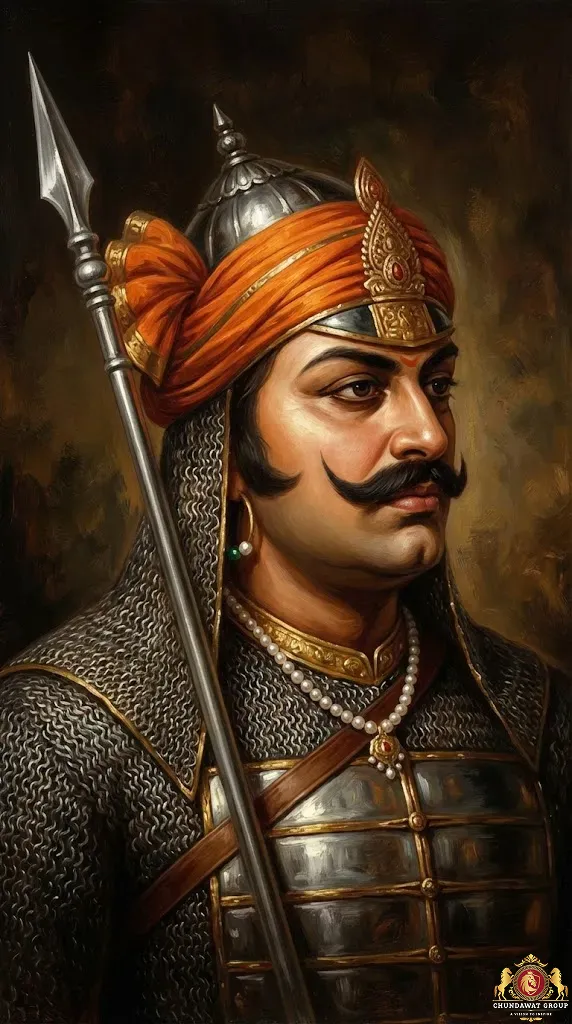
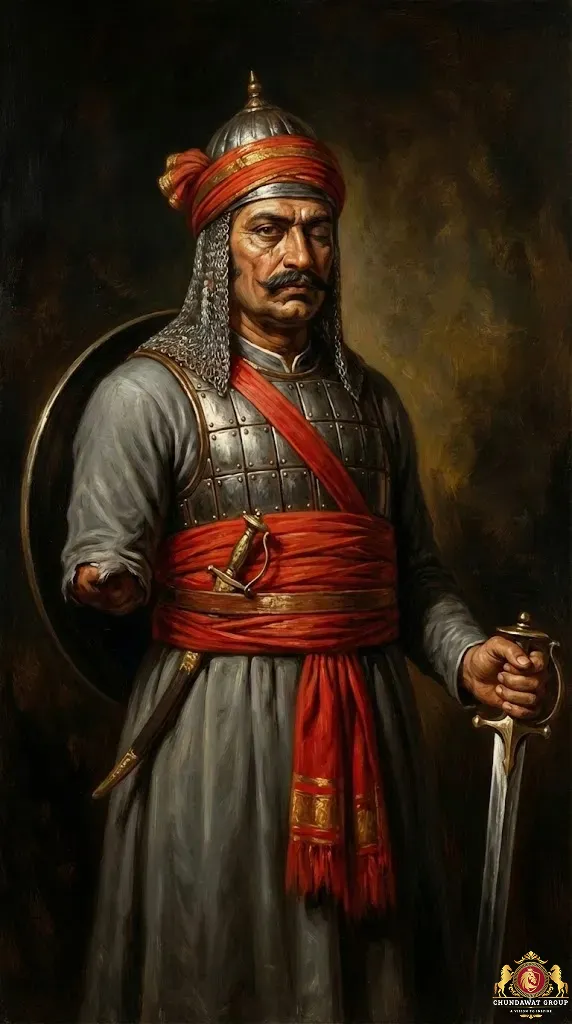
Maharana Amar Singh I was the eldest son of Maharana Pratap and Maharani Ajabde Punwar and the successor to the Mewar throne. He belonged to the Sisodia Rajput dynasty, which had ruled Mewar for centuries. He became Maharana following Pratap's death on 19 January 1597 and ruled until his own death on 26 January 1620.
Amar Singh's reign lasted almost 23 years and can broadly be divided into two phases: 1597–1615, during which he continued military resistance against the Mughal Empire, and 1615–1620, a period of peace and reconstruction following the Mughal–Mewar settlement.
He is therefore important not merely as Maharana Pratap's successor, but as the ruler who navigated Mewar through the difficult transition between prolonged warfare and political accommodation with the Mughal Empire.
Family and Early Life
Amar Singh was born on 16 March 1559 at Chittorgarh, according to the traditional chronology of the Mewar royal house. He was the eldest son of Maharana Pratap and Maharani Ajabde Punwar, daughter of Rao Mamrakh of Bijolia.
His childhood coincided with the Mughal conquest of Chittorgarh and the displacement of the Mewar court. When Maharana Pratap became ruler in 1572, Amar Singh grew up alongside his father during the years of resistance against Emperor Akbar. He therefore experienced the hardships of warfare, movement through the Aravalli hills and the struggle to maintain Mewar's political independence.
Amar Singh's familiarity with the hills, valleys and mountain routes of Mewar came from spending his formative years with his father. This knowledge later proved valuable during his own military campaigns.
Amar Singh and Maharana Pratap
The relationship between Maharana Pratap and Amar Singh is central to understanding Amar Singh's reign. Pratap's struggle against the Mughals shaped the political expectations placed upon his eldest son. Amar Singh fought alongside his father and participated in the military campaigns of the late sixteenth century.
He is traditionally associated with the Battle of Dewair, where Mewar forces achieved a significant victory against Mughal positions in 1582. When Maharana Pratap died in 1597, Amar Singh inherited not only the title of Maharana but also the unfinished political struggle with the Mughal Empire.
The challenge before him was enormous: preserve the gains achieved by his father while facing an empire with vastly greater military and financial resources.
His Accession to the Throne
Maharana Pratap died on 19 January 1597, and Amar Singh succeeded him as ruler of Mewar. His accession took place at a critical moment. Although Pratap had recovered considerable territory during the later part of his reign, Chittorgarh remained under Mughal control, and Mewar's conflict with the empire had not been resolved.
Amar Singh therefore continued his father's general policy of resistance. His early reign saw repeated Mughal attempts to bring Mewar firmly under imperial authority. Emperor Akbar sent forces into the region, and after Akbar's death in 1605, his successor Jahangir continued the Mughal campaign against Mewar.
Mewar Under Maharana Amar Singh I
The first part of Amar Singh's reign was dominated by warfare. The Mughal Empire repeatedly attempted to bring Mewar under its control, while Amar Singh sought to preserve the independence and territorial interests inherited from his father.
Mewar's resources, population and agricultural economy suffered from repeated military campaigns. Villages and territories were contested, while the Maharana and his forces often operated from the rugged regions of western Mewar.
Under Jahangir, several expeditions were sent against Mewar. The eventual Mughal campaign led by Prince Khurram, the future Emperor Shah Jahan, created particularly serious pressure on Amar Singh. By this stage, continued warfare had become increasingly difficult for Mewar to sustain.
Maharana Amar Singh I and the Mughal Empire
Amar Singh's relationship with the Mughal Empire changed dramatically during his reign. Initially, he continued Maharana Pratap's policy of resistance. The Mughal Empire launched repeated campaigns against Mewar, but the mountainous geography made it difficult to impose complete control.
After Jahangir became emperor in 1605, the Mughal campaign continued. The emperor regarded the settlement of Mewar as an important unfinished objective inherited from Akbar. The most decisive phase came when Prince Khurram was given command. The pressure created by this expedition contributed to Amar Singh's decision to negotiate.
In 1615, Amar Singh entered into an agreement with Jahangir, with Prince Khurram playing an important role in the negotiations. The settlement ended the long period of direct Mughal–Mewar warfare.
The 1615 Mughal–Mewar Treaty
The settlement of 1615 was one of the most consequential events in the history of Mewar. For nearly four decades, the kingdom had been locked in intermittent conflict with the Mughal Empire.
Among the key provisions were: the Maharana himself was not required to attend the Mughal court personally; a member of the Mewar royal family would represent the Maharana at court; Mewar retained its ruling dynasty; the territories around Chittorgarh were restored to Mewar; the fort of Chittorgarh was not to be re-fortified; Mewar supplied a military contingent to the Mughal emperor; and the Mewar–Mughal relationship did not require a matrimonial alliance between the two ruling houses.
The settlement needs to be understood as a political compromise after prolonged warfare, rather than simply as an unconditional surrender.
Why Did Amar Singh Make Peace With the Mughals?
The decision to negotiate was driven by several factors. Decades of conflict had placed enormous pressure on Mewar through military exhaustion. Continuous warfare disrupted agriculture, settlements and revenue collection, causing severe economic damage.
The Mughal Empire possessed substantially greater manpower and financial resources, giving them military superiority. A negotiated settlement offered a way to preserve the Sisodia ruling house rather than risk further devastation. The Mughal emperor Jahangir was also interested in ending the prolonged conflict and securing peace on his western frontier.
The resulting settlement gave both sides something they needed: peace for Mewar and political consolidation for the Mughal Empire.
Life After the Treaty
The years after the 1615 settlement were very different from the earlier part of Amar Singh's reign. With major warfare reduced, the Maharana could turn his attention toward administration, rehabilitation and rebuilding.
Amar Singh worked to rehabilitate people who had left Mewar during the prolonged conflict and encouraged their return. He also focused on administration and cultural patronage.
Amar Singh was not only a warrior-ruler who fought the Mughals. In his later years, he became a ruler concerned with restoring the kingdom after years of destruction.
Architecture Under Maharana Amar Singh I
Amar Singh's architectural legacy is less dominant in popular memory than that of some later Maharanas, but he continued the development of Udaipur's royal landscape. One notable project associated with his reign was Amar Mahal, within the Udaipur City Palace complex.
His architectural patronage should be viewed in the context of a kingdom emerging from prolonged conflict. The priority was not merely monumental construction. The rebuilding of royal spaces, religious institutions and settlements formed part of the larger process of restoring Mewar.
Mewari Miniature Painting Under Amar Singh I
Amar Singh's reign was also important for the development of the Mewar school of miniature painting. The earlier Chawand school associated with Maharana Pratap continued to influence Mewari painting during the transition into Amar Singh's reign.
One of the most important artistic achievements associated with this period is the Ragamala series, painted in the early seventeenth century. The paintings combine Hindu religious and literary themes, musical concepts, landscapes, courtly scenes, strong colours, stylised architecture and distinctive Mewari figures.
The Mewari artistic tradition would flourish even more dramatically under later rulers, particularly during the reign of Jagat Singh I.
Death and Succession
Maharana Amar Singh I died on 26 January 1620 in Udaipur at approximately 60 years of age. He was succeeded by his son, Maharana Karan Singh II, who ruled Mewar from 1620 to 1628.
Karan Singh inherited a very different political environment from the one Amar Singh had faced at the beginning of his reign. The major Mughal–Mewar conflict had ended, creating the conditions for the cultural and architectural development that became increasingly visible during the reigns of Karan Singh and his successor Jagat Singh I.
Amar Singh I's Legacy
Maharana Amar Singh I's legacy is inseparable from the legacy of his father, but the two rulers should not be treated as identical. Maharana Pratap became the enduring symbol of armed resistance. Amar Singh inherited that struggle and continued it for many years, but ultimately chose a negotiated settlement when the continued war threatened the long-term survival of Mewar.
He continued Maharana Pratap's resistance, secured a political settlement that preserved the Sisodia dynasty's position, helped Mewar recover after peace was established, supported art and architecture, and created the conditions for the next generation. The magnificent cultural period associated with Karan Singh II and Jagat Singh I cannot be understood without the political transition achieved during Amar Singh's final years.
The true test of a warrior is not only in war, but in knowing when peace is the braver choice for his people.
Battles & Conquests
Battle of Dewair
1582Fought alongside his father Maharana Pratap, Amar Singh's bravery was pivotal in this battle, which marked the turning point in Pratap's resistance and led to the recovery of most of Mewar from Mughal control.
Resistance Against Akbar's Campaigns
1597–1605After succeeding his father, Amar Singh continued the general policy of resistance against Emperor Akbar's forces, relying on the mountainous geography of Mewar and mobile warfare rather than conventional open-field battles.
Defense Against Jahangir's Campaigns
1605–1615After Jahangir became emperor in 1605, the Mughal campaign against Mewar intensified. Several military expeditions failed to completely subdue Amar Singh. The most decisive phase came when Prince Khurram (future Shah Jahan) was given command, creating pressure that contributed to Amar Singh's decision to negotiate the 1615 settlement.
📜 Did You Know?
In the Battle of Dewair (1582), a young Amar Singh reportedly killed the Mughal commander Sultan Khan by driving his spear through both the commander and his horse, pinning them to the ground.
He was the last Maharana of Mewar to be born in Chittorgarh before it fell to Akbar in 1568.
The 1615 settlement contained a significant symbolic provision: the Maharana himself did not have to personally attend the Mughal court—instead, his heir or another representative could fulfil the courtly obligation.
Amar Mahal within the Udaipur City Palace complex is associated with his architectural patronage.
His reign was important for the development of the Mewar school of miniature painting, continuing the Chawand school tradition associated with Maharana Pratap.
After signing the treaty, he focused on rehabilitating people who had left Mewar during the prolonged conflict and encouraging their return.
Frequently Asked Questions
Who was Maharana Amar Singh I?
+
Maharana Amar Singh I was the eldest son and successor of Maharana Pratap and ruled Mewar from 1597 to 1620. He belonged to the Sisodia Rajput dynasty.
Who was the father of Maharana Amar Singh I?
+
His father was Maharana Pratap, one of the most famous rulers of Mewar.
Who was the mother of Maharana Amar Singh I?
+
His mother was Maharani Ajabde Punwar, also known as Ajabde Parmar. She belonged to the Parmar family of Bijolia.
When did Maharana Amar Singh I become Maharana?
+
He succeeded Maharana Pratap on 19 January 1597.
How long did Maharana Amar Singh I rule Mewar?
+
He ruled Mewar for approximately 23 years, from 1597 until 1620.
Did Maharana Amar Singh I fight the Mughals?
+
Yes. Much of his reign was spent resisting Mughal attempts to bring Mewar under direct imperial control. He fought Mughal forces during the reigns of both Akbar and Jahangir.
What happened between Maharana Amar Singh I and Jahangir?
+
Amar Singh fought Jahangir's Mughal forces for several years before eventually negotiating a settlement in 1615. The agreement brought an end to the prolonged conflict between Mewar and the Mughal Empire.
When was the Mughal–Mewar treaty signed?
+
The settlement was concluded in 1615 during the reign of Mughal Emperor Jahangir. Prince Khurram, later Shah Jahan, played an important role in the negotiations.
Did Amar Singh I surrender Mewar to the Mughals?
+
It is more accurate to describe the 1615 agreement as a negotiated political settlement after prolonged warfare. The Sisodia dynasty remained the ruling house of Mewar, and the Maharana retained substantial internal authority.
Who succeeded Maharana Amar Singh I?
+
His son Maharana Karan Singh II succeeded him in 1620.
When did Maharana Amar Singh I die?
+
He died on 26 January 1620 in Udaipur.
What was Amar Singh I's contribution to art?
+
His reign continued Mewar's artistic traditions, including miniature painting. The Ragamala tradition is particularly associated with the cultural environment of his reign.
Did Amar Singh I build Amar Mahal?
+
Amar Mahal in the Udaipur royal palace complex is associated with Maharana Amar Singh I's architectural patronage.
Why is Maharana Amar Singh I important?
+
Amar Singh I is important because he continued Maharana Pratap's resistance, survived prolonged Mughal pressure, negotiated the 1615 settlement and helped begin Mewar's transition from wartime resistance to reconstruction.