The Essence
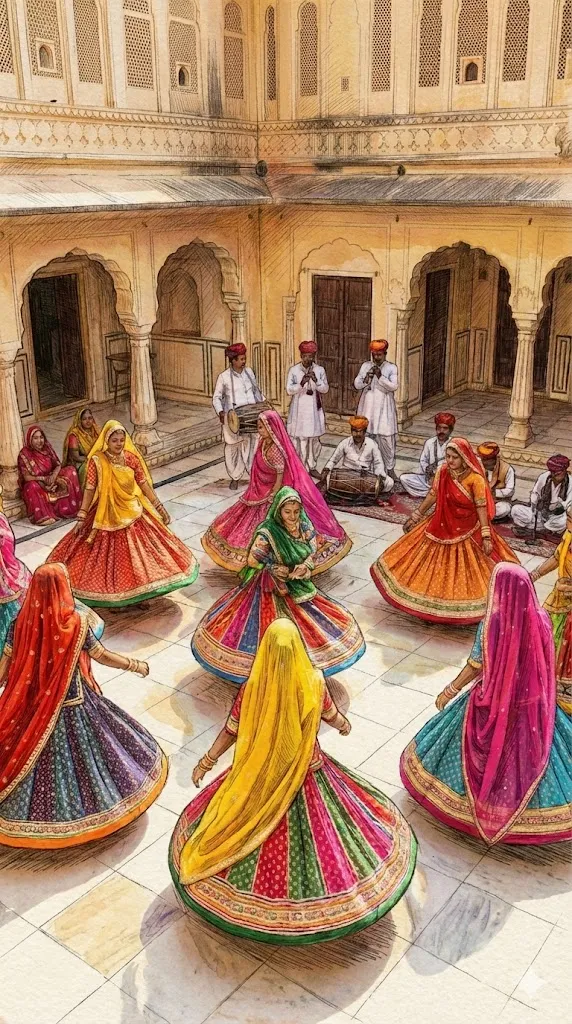
Ghoomar is the most recognizable traditional dance of Rajasthan, known for the graceful pirouetting movements of women dressed in flared Ghagras. The name derives from "Ghoomna" (twirling). The dance involves rhythmic clapping, delicate hand gestures, and singing while moving in circles. The dancers traditionally veil their faces with an Odhni (ghunghat), symbolizing modesty and poise. Unlike mixed folk dances, traditional Ghoomar has historically been an exclusive dance performed by women.
Origins & History
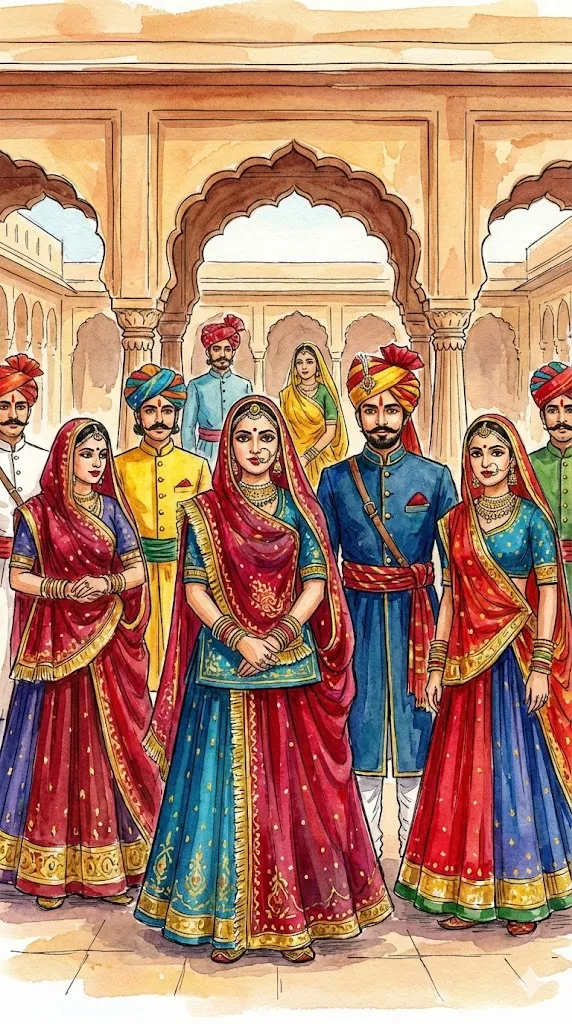
Ghoomar holds a distinct cultural and religious tradition in Rajasthan, historically associated with the worship of Maa Chamunda. The traditional form of Ghoomar developed in the royal and cultural heartlands of Marwar and Dhundhar. It is distinct from "Ghumaro", a traditional dance associated with the Bhil community that may be performed by both men and women. Over centuries, Ghoomar became an integral ceremonial and festive tradition of Rajput women, cherished during Gangaur, Teej, royal assemblies, and auspicious family celebrations.